TENZA · SUNZIP — Tall & inclined glass
InteriorTensioned / zip-in-channelPer opening
The screen follows the glazing plane on raked or floor-to-ceiling glass, where a standard roller would pull away from the glass.
Inclined glazing followed by the screen, the view kept and the heat managed — for premium residential interiors.
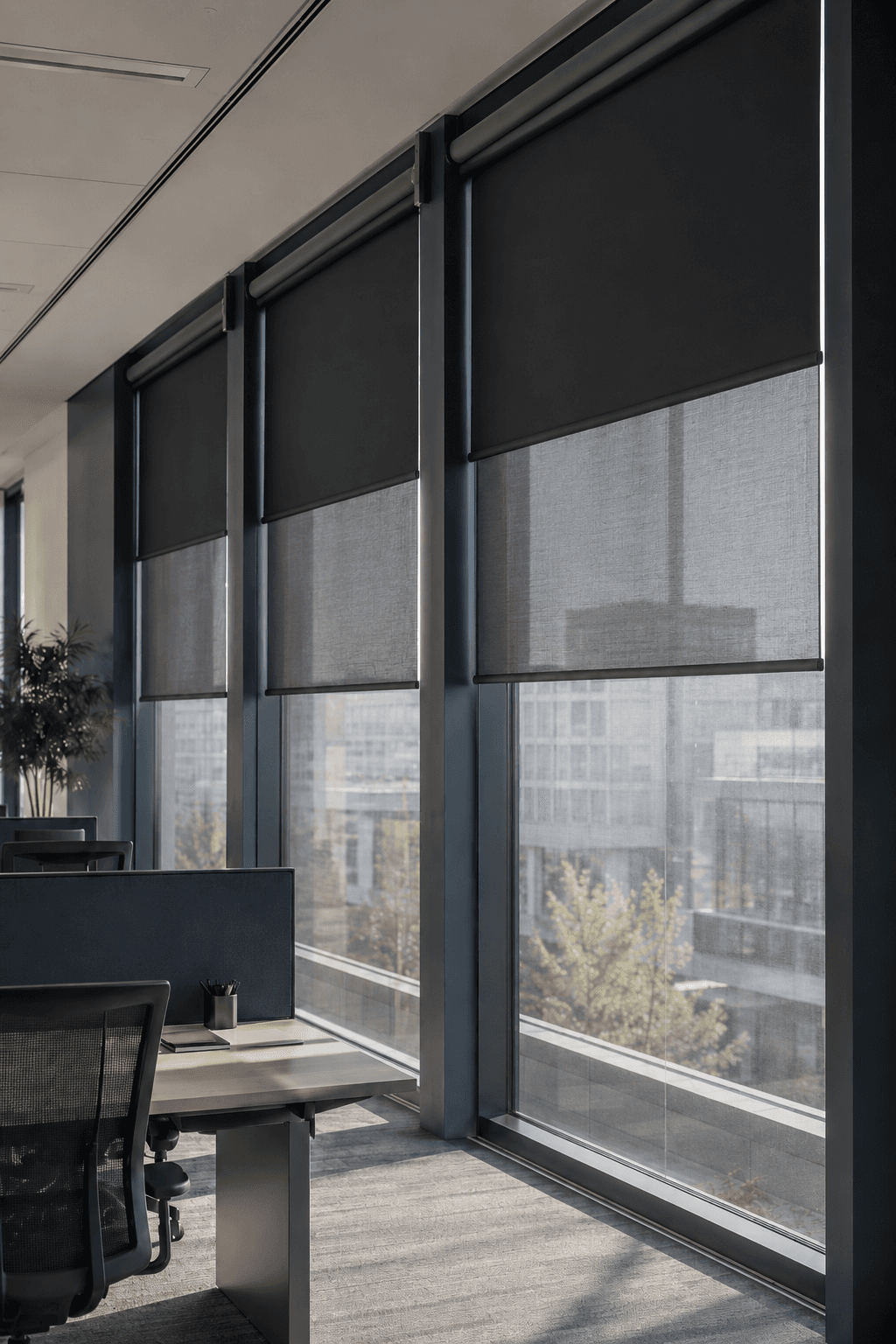
The screen follows the glazing plane on raked or floor-to-ceiling glass, where a standard roller would pull away from the glass.
A daytime view screen and a nighttime blackout on one headrail — built for bedrooms.
Solar control with the view kept, or soft decorative diffusion, chosen per room.
Projected shade over terraces and outdoor living, manual or motorized.
U.S. Department of Energy field studies found whole-building summertime cooling savings of 15–25% from optimized high-efficiency shades, interior and exterior.
U.S. DOE / PNNL — Building America
A ten-month study in an occupied high-rise measured a 25% drop in energy use across heating and cooling seasons with motorized insulating shades; most occupants preferred them to the old blinds.
Illinois Institute of Technology — Willis Tower, Chicago
A peer-reviewed study of automated interior insulating shades recorded up to 20.5% daily energy reduction under automated control, projecting 20–35% savings vs. baseline.
Energy (Elsevier), 2024 — weather-normalized analysis
Findings from independent third-party research, cited as industry context. They describe what automated shading can do as a category — not a measured performance claim for any SUNX product. Outcomes vary with climate, glazing, fabric and control strategy.
See all case studies →The outlook held while glare and heat are managed.
Solar gain controlled on large glazed living spaces.
Low-noise drives that integrate into the home.
Each system specified to the glass it serves.
Tell us the space and the exposure — we specify fabric, system and control to the opening.