Loading…
Technology & control
The shade moves itself.
Motorization and open control. SUNX shades move on command and integrate with the building-automation and control systems you already specify — openly, with no proprietary lock-in.
- Control
- Manual → Auto
- Compatibility
- Open
- Drives
- RM · HS · LP · XT
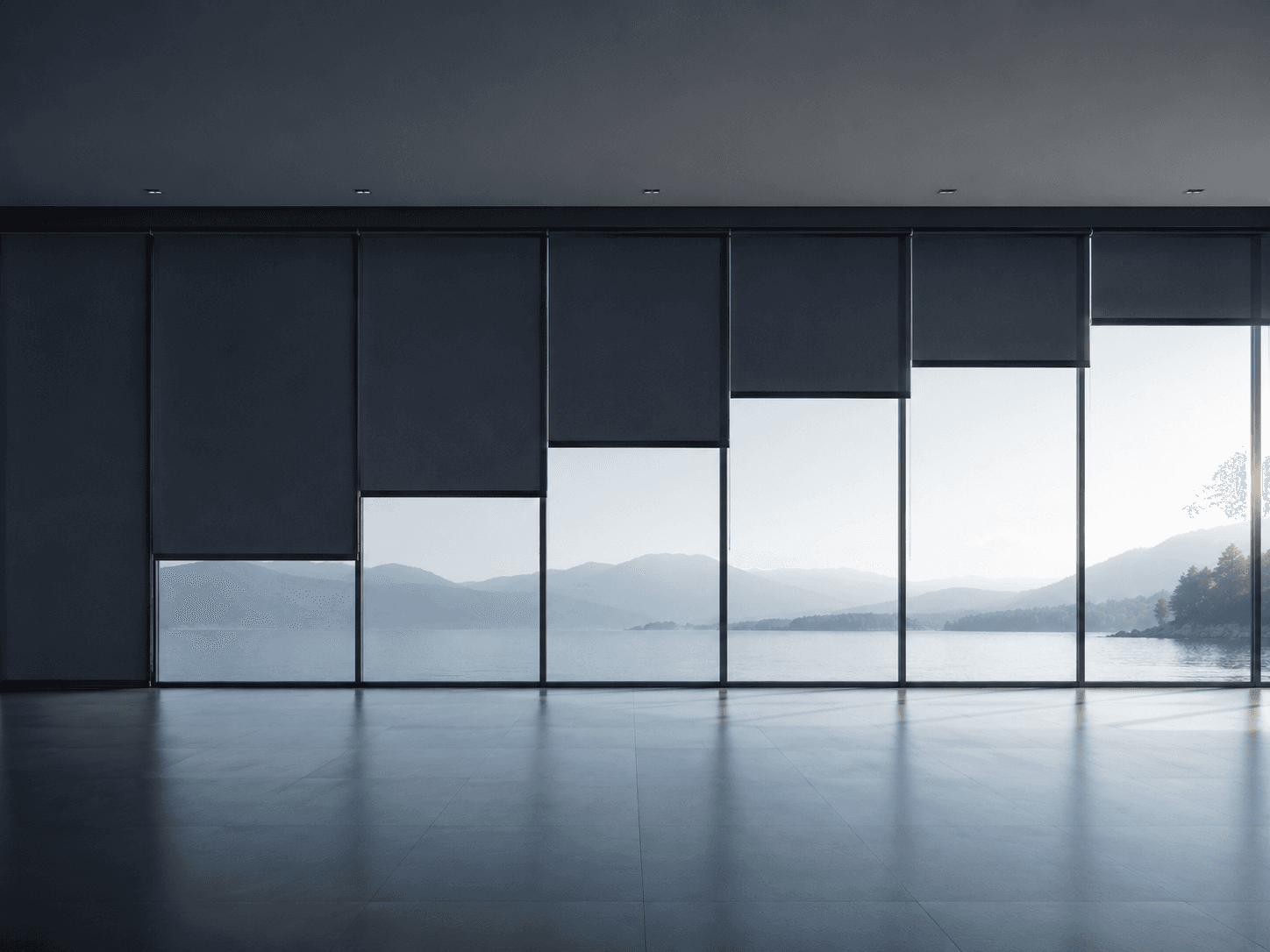
Motors, to the project. One drive, every system.
A single motorization approach spans interior and exterior systems. Drives are selected for the system and the opening — torque and speed sized to span and weight, not specified from a generic table.
Interior systems
Roller, zip-in-channel and tensioned screens, driven quietly inside the headrail.
Exterior systems
Façade screens and awnings, with motors sized for wind exposure and span.
Zoned floors
Groups and scenes across a floor plate — operated together or by zone.
Sensor-driven
Sun, wind and schedule inputs drive position automatically.
SUNX Drive — four drives, sized per system
| Drive | Type | Tube | Torque | Speed | Supply | Noise | IP | Specified with |
|---|---|---|---|---|---|---|---|---|
| RM | Line-voltage tubular | 35 / 45 mm | 10–50 Nm | 12–17 rpm | 230 V AC | < 40–45 dB | IP44 | SUNZIP · TENZA · DUO |
| RM-HS | High-speed tubular | 35 / 45 mm | 6–10 Nm | 28–30 rpm | 230 V AC | < 40–45 dB | IP44 | Large interior · projection · tall drops |
| LP | Wire-free lithium | 35 mm | 10 Nm | 13 rpm | 12 V DC · Li | < 40 dB | IP44 | Retrofit · no power at head |
| XT | Exterior · sensor-ready | 45 mm | 15 Nm | 30 rpm | 230 V AC | — | IP44¹ | MERIDIAN · VELARIA |
¹ XT exterior rating is IP44; a higher exterior rating is available on request — not assumed. Figures are as published by the drive manufacturer and confirmed per project. Drives integrate with open-protocol controls; no third-party control brand is implied. All drive sheets →
Open compatibility · SYNC
Integrates with what you already specify.
SYNC is not a separate product — it is the open-compatibility layer over any motorized SUNX shade. It responds to sensors, schedules and the sun's path through the standard control systems on the project. No proprietary controller is required, and no motor or automation brand is locked in.
SUNX shades integrate with leading building-control systems — including Lutron, Crestron and KNX — as the shading layer inside the control architecture the project already runs.
- Sensor
- Controller
- SUNX shades
Shaded only where the sun hits
SensorsSensors technical sheet →
Three weather-and-light sensors signal the motor directly over open radio — independently or together — so shading acts on conditions, not schedules alone.
Sun + Wind
IP559 levels each · 433 / 868 MHz
Wind
IP659 sensitivity levels · 868.3 MHz
Glass (light)
On requestLux at-glass · 433.92 MHz
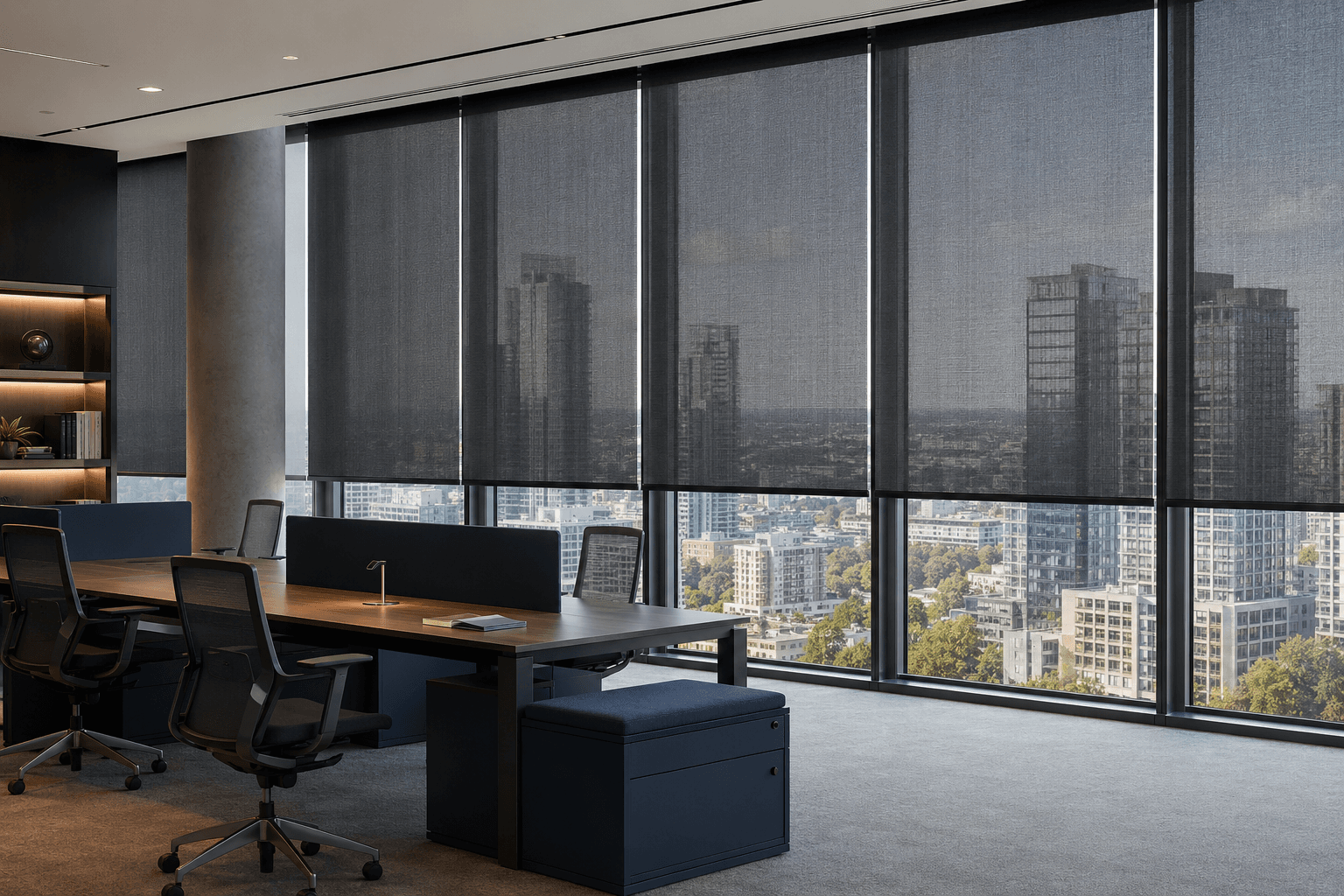
Shade management
Sun-tracked, by zone.
Astronomical scheduling and sensors place each shade where it is needed — lowering only the zones the sun actually reaches, and lifting the rest to keep daylight and the view. The result is glare and heat managed continuously, without a person at every window.
Astronomical scheduleSun-position trackingZoned groupsSensor response
Reflected before it becomes heat.
ReFlex® is the SUNX solar-reflective fabric line: it reflects solar radiation at the glazing line before it turns into interior heat. One fabric decision acts on three things a building is measured by — cooling load, visual comfort and daylight quality.
- Solar reflectance
- ≥65%
- ReFlex® standard floor; per-fabric figure on request
- UV block
- ≥90%
- of incident ultraviolet radiation
- Openness factor
- 1 / 3 / 5 / 10%
- selected per facade and program
Less solar heat gain
Solar radiation is reflected at the window plane instead of absorbed into the space. Heat that never enters is heat the HVAC system never has to remove.
Cooling-energy savings
Lower solar gain reduces air-conditioning load — a direct input to building efficiency. Savings are modeled per project from orientation, glazing and climate.
Glare control at the screen
Daylight arrives diffused, without hard contrast on monitors. Less glare means less glare-related visual fatigue across screen-based work — a working condition, measured in occupant performance.
Occupant thermal comfort
Reflecting radiation stabilizes the temperature at the glazing line, so the perimeter zone stays usable — desks near the window work like desks anywhere else on the floor.
Daylight, with the view
Openness factor — 1, 3, 5 or 10% — sets how much diffuse natural light passes while the outward view is preserved. Specified per fabric, per facade orientation.
UV protection for interiors
ReFlex® blocks ≥90% of UV, reducing the ultraviolet exposure that fades and degrades interior finishes and furnishings over time.
Specified where the stakes are highest: corporate office floors, where glare and perimeter heat shape how the floor plate is used, and hotels, where guest comfort is the product. 100% cationic polyester, PVC-free and fully recyclable — OEKO-TEX® Standard 100 · DIN 4102 B1 · NFPA 701, with a 10-year warranty.
Managed light is saved energy.
Shading is part of how a building performs. Intercepting solar gain before it becomes heat reduces cooling load; daylight kept at the right level reduces lighting load. The effect is qualitative here — project figures depend on orientation, glazing and climate, and are modeled per project.
Less to cool
Solar gain intercepted at the opening means less heat for the HVAC system to remove.
Less to light
Daylight held at a usable level reduces reliance on electric lighting through the day.
Steady, by zone
Automated, zoned operation keeps conditions stable instead of reacting after the space overheats.
Supports daylight and energy credits under green-building frameworks such as LEED, as one input to the model. Specific savings percentages quoted in industry literature belong to the studies and fabrics that measured them and are not transferable as a SUNX claim — SUNX supplies the shading data the energy model needs.